
Planning a Building Project in London? Here's How to Coordinate Your Trades from Start to Finish
Whether you're building an extension, renovating a property, or constructing a new home from the ground up, coordinating multiple trades is one of the biggest challenges you'll face. A successful building project relies on careful planning, clear communication, and ensuring every contractor arrives at the right stage of the process.
In London, building projects often involve a wide range of specialists, from builders and electricians to security installers and aerial technicians. Understanding how these trades work together can help keep your project on schedule, reduce costs, and ensure a high-quality finish.

Start with a Clear Project Plan
Before any work begins, it's important to establish a detailed plan. This should outline the scope of the project, budget, timeline, and the trades required at each stage.
For larger projects, many homeowners choose to work with experienced professional builders London residents trust to oversee the construction process. A reputable building company can coordinate various contractors, manage scheduling, and ensure work progresses efficiently.
Having a clear plan from the outset helps avoid delays, misunderstandings, and unnecessary expenses later on.
Stage One: Groundworks and Structural Construction
Most building projects begin with site preparation, demolition, foundations, and structural work. Builders, bricklayers, steel installers, and groundwork specialists are typically involved during this phase.
The focus at this stage is creating a solid structure that can safely support the finished property. Any structural changes should be completed before specialist trades begin installing services such as electrical systems, plumbing, or communications infrastructure.
Regular communication between contractors is essential. Delays during the structural phase can affect every subsequent trade, making early coordination particularly important.
Stage Two: Electrical and Plumbing First Fix
Once the structure is in place, electricians and plumbers usually carry out their first-fix installations. This includes running cables, installing pipework, positioning sockets, and preparing systems that will later be connected to fixtures and appliances.
Planning ahead is particularly important here. Homeowners should consider future requirements such as smart home systems, security equipment, media rooms, and additional electrical outlets.
This is also the ideal stage to plan for an aerial installation new build project. Installing aerial cabling before walls are plastered allows cables to remain hidden and provides a cleaner finish throughout the property. Future-proofing television and communications infrastructure at this stage can save considerable time and expense later.
Stage Three: Security and Surveillance Systems
Modern homeowners are increasingly prioritising security as part of their building projects. Installing surveillance equipment during construction is significantly easier than retrofitting systems once the property is complete.
Professional CCTV installation Peterborough specialists and installers across the UK often recommend integrating security infrastructure early in the build. This allows cameras, network cabling, recording equipment, and power supplies to be installed discreetly within the building fabric.
For homeowners interested in protecting their investment, our dedicated CCTV Installation Services can help create a tailored security solution that complements the overall project.
Early planning also enables security systems to integrate seamlessly with smart home technology, remote monitoring platforms, and alarm systems.
Stage Four: Aerial and Communications Installation
Television and communications systems are frequently overlooked until the final stages of a project. However, involving aerial specialists earlier can help avoid unnecessary disruption.
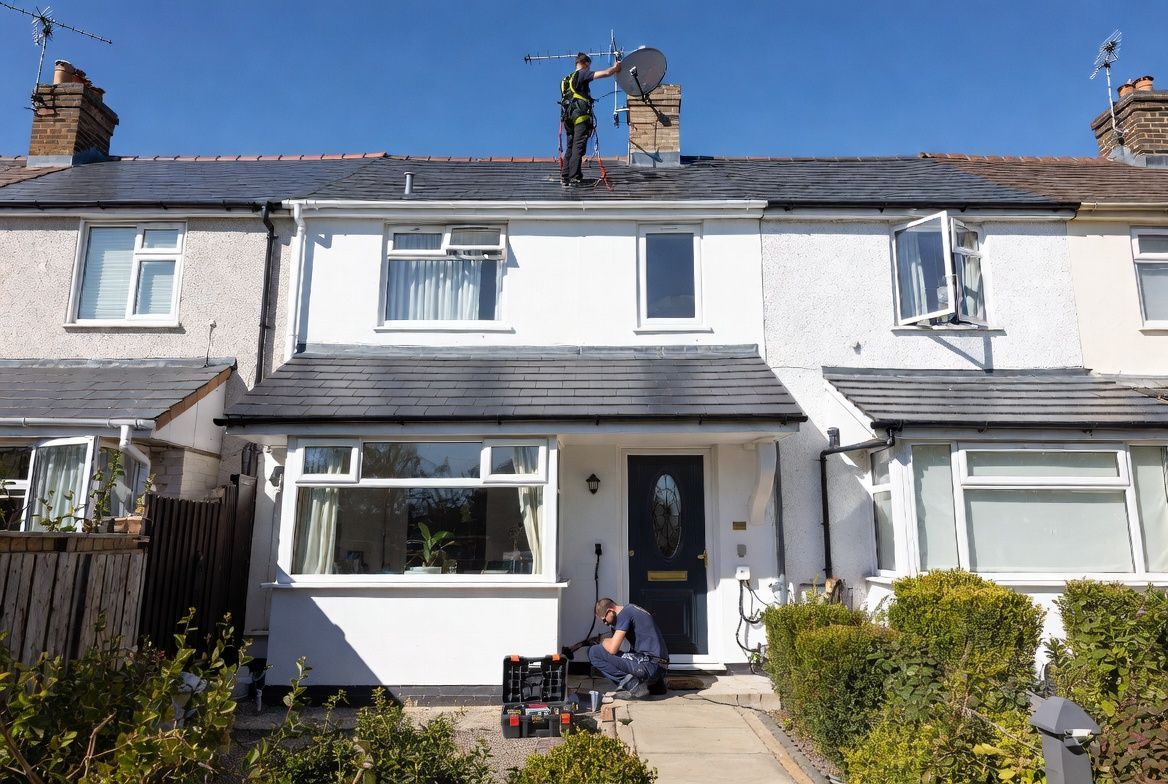
An aerial installation new build setup often requires careful planning to ensure optimal signal reception and efficient cable routing. By installing aerial points, distribution systems, and related infrastructure before decorating begins, homeowners can achieve a cleaner and more professional finish.
Whether you're creating a family entertainment space, home office, or media room, properly installed aerial systems help ensure reliable television and communication services throughout the property.
Homeowners can learn more about our Aerial Installation & Repair services for both new builds and existing properties.
Stage Five: Plastering and Internal Finishes
Once all first-fix services have been completed, plasterers can begin preparing walls and ceilings. This stage transforms the project from a construction site into a recognisable living space.
It is essential that all cabling, pipework, security infrastructure, and communication systems are completed before plastering begins. Any missed installations could require walls to be reopened, causing delays and additional costs.
Following plastering, decorators, flooring specialists, and carpenters complete the property's internal finishes.
Stage Six: Second Fix and Testing
The second-fix stage involves installing sockets, switches, lighting fixtures, sanitary ware, kitchen appliances, and other visible components.
Security systems, CCTV cameras, aerial equipment, and communication networks are also fully connected and tested during this phase.
Comprehensive testing ensures every system functions correctly before the project is handed over. Identifying issues at this stage allows contractors to resolve problems quickly without disrupting daily life after occupation.
Communication Is the Key to Success
One of the most common causes of delays in building projects is poor communication between trades. Clear scheduling, regular site meetings, and detailed project updates help ensure everyone understands their responsibilities and deadlines.
Many experienced building contractors use project management systems that keep all stakeholders informed throughout the build. This approach minimises confusion and allows problems to be addressed before they become costly setbacks.
Homeowners should also maintain regular contact with their contractors to ensure decisions are made promptly and work continues smoothly.
Final Thoughts
Coordinating trades effectively is one of the most important aspects of any successful building project. From structural construction and electrical work to security systems and aerial installations, every stage depends on careful planning and collaboration.
By involving the right specialists at the right time and working with experienced professionals, homeowners can reduce stress, avoid delays, and achieve a high-quality finish. Whether you're building a new property or undertaking a major renovation, a well-organised project will deliver better results and long-term value for your investment.